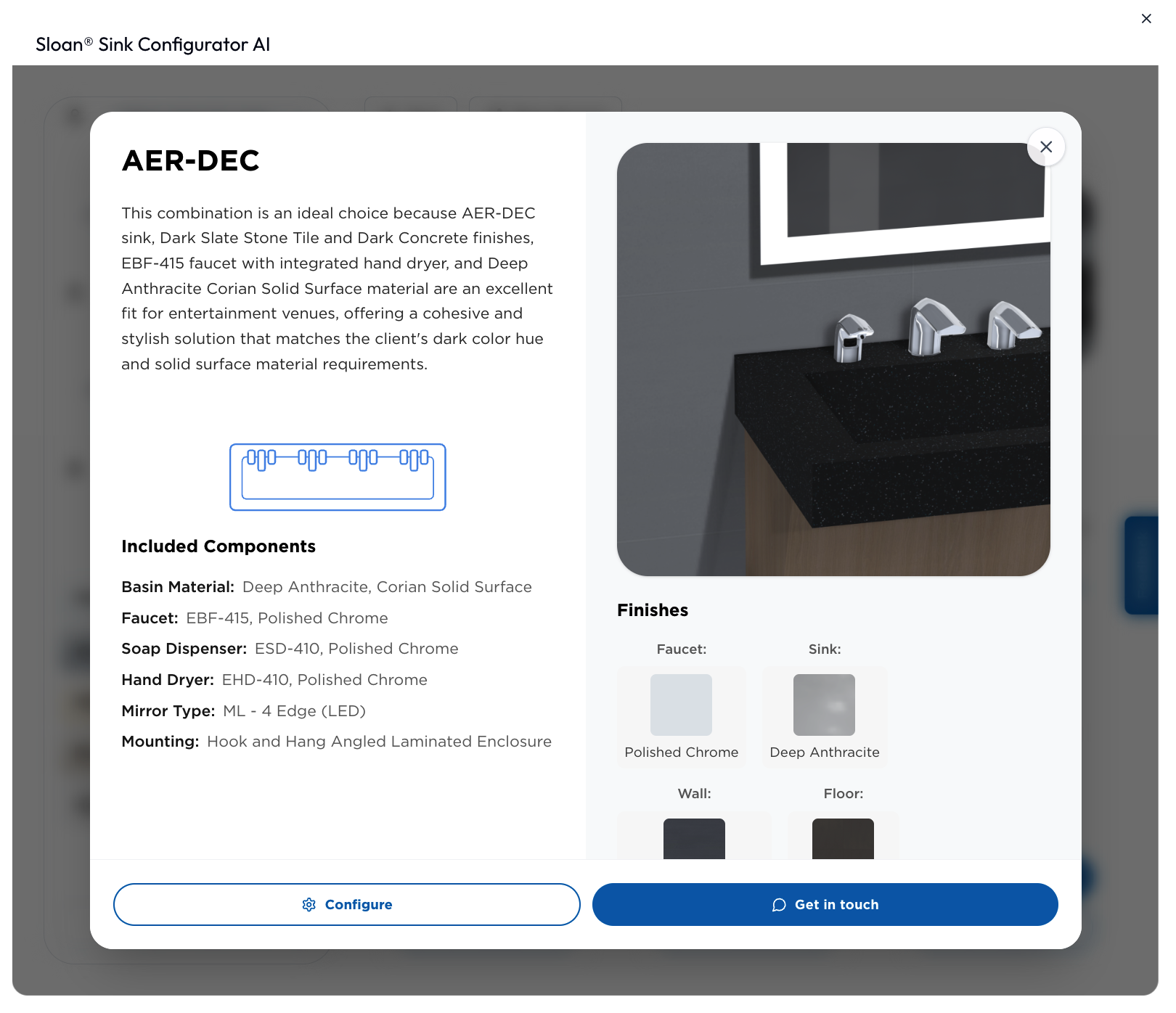
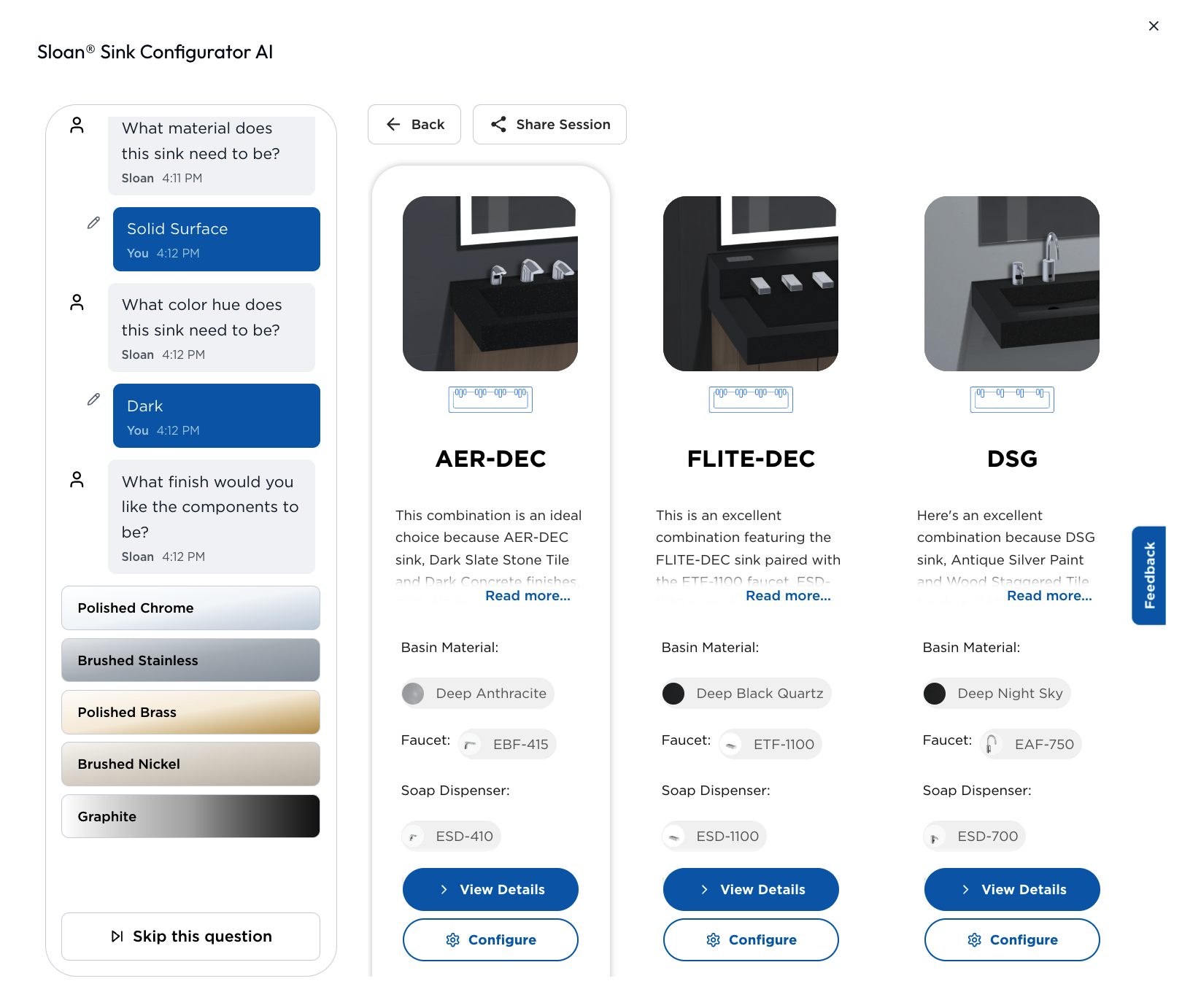
Sloan put a Sales Agent in front of its Sink Configurator so architects and designers, dealers and sales could answer a few project questions and get a tailored sink configuration in real time. Instead of asking users to start with product expertise, Sloan starts with the project: venue, traffic, and design priorities.
The Result: users get 80% of the way to a finalized sink design in roughly 20% of the time.
“Threekit helps us advance users 80% of the way in 20% of the time”
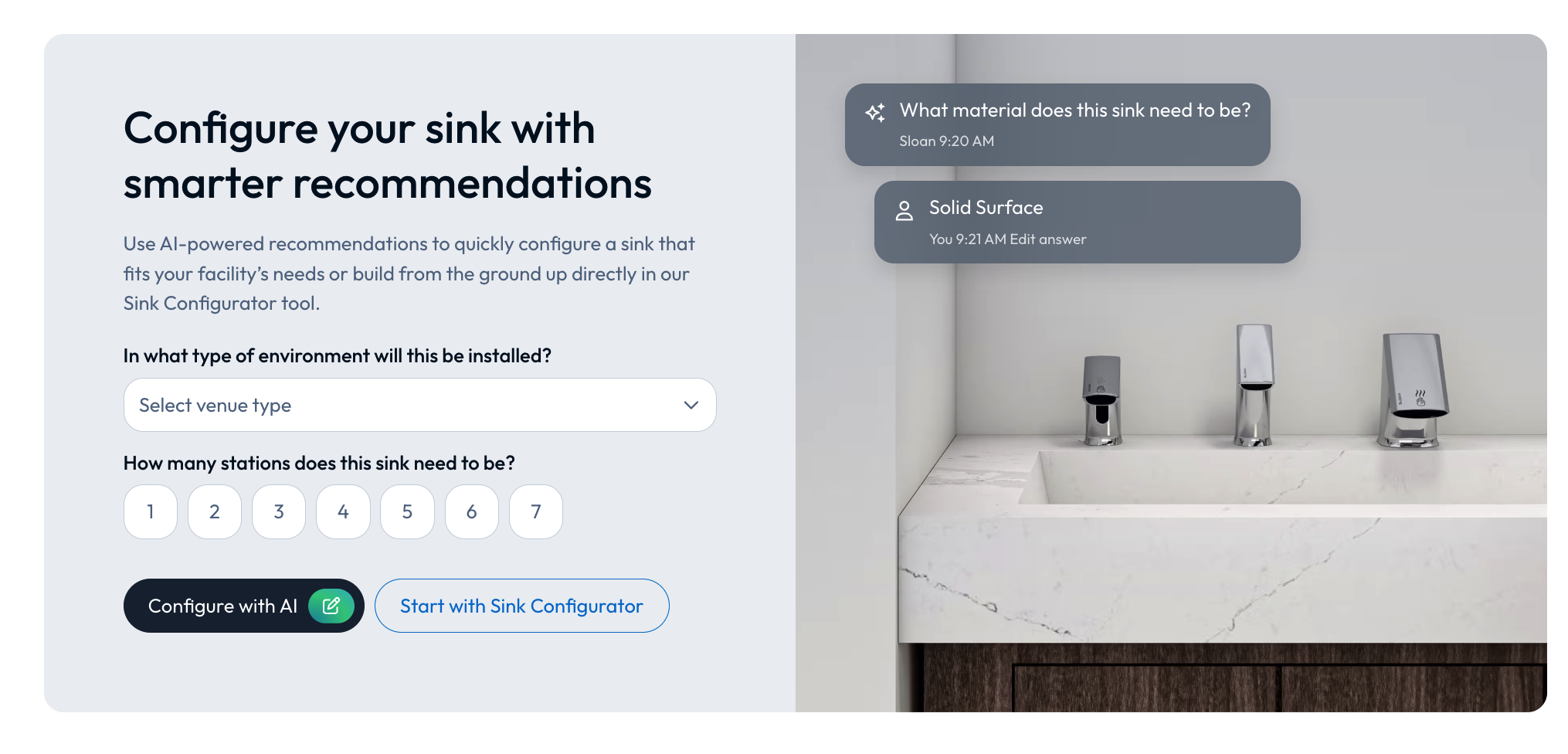
Sloan’s AI-powered Guided Design sits at the top of the Sink Configurator.
Users answer a few questions about their project. The system recommends a tailored sink configuration, generates a visual, and lets the user keep refining from there.
That means users do not need to understand every product, rule, or fixture pairing before they begin.
A few specific things they got right:
Faster answers, early pricing, flexible configurations, and better-qualified leads – all with less strain on sales.

The AI Sales Agent answers the questions the rep used to forward to engineering or a senior colleague. Tradeoffs, value, pricing implications, aesthetic and functional differences, all surfaced inline.

The rep can give a customer a credible number in the first conversation, not the fifth.

Material swap, station count, accessory change. The configuration flexes.
“Sloan’s Sink Configurator with AI-powered Guided Design offers users greater simplicity, speed, and confidence.”
 Emerson Vogel, Product Manager, Sloan
Sloan did not bolt AI on as a feature. They put it where the friction was: at the very top of a complex specification process. Reps and specifiers skip the first 25 decisions without losing any of the customization that makes Sloan worth choosing. Faster path from brief to saved config, lighter load on sales, and a foundation for the full room.