Start with the room and expected traffic. Threekit assembles compatible fixture components and checks the required clearances.
The quote has to capture the requirements that change the product, price and installation.
Configuration checks
The bowl, flushometer, carrier and seat may each have a separate part number. Sellers need to check the assembly as a whole when a specification changes.
Accessibility, flow and material requirements affect which options suit the project. The quoting process needs the applicable project rules and manufacturer data before checking the configuration.
The quote must make the chosen components and assumptions clear. The fixture schedule and submittal can require different fields and document formats from the sales quote.
These are configuration considerations, not a compliance certification. Applicable requirements depend on the product, project location and current standards. Confirm them with a qualified specialist.
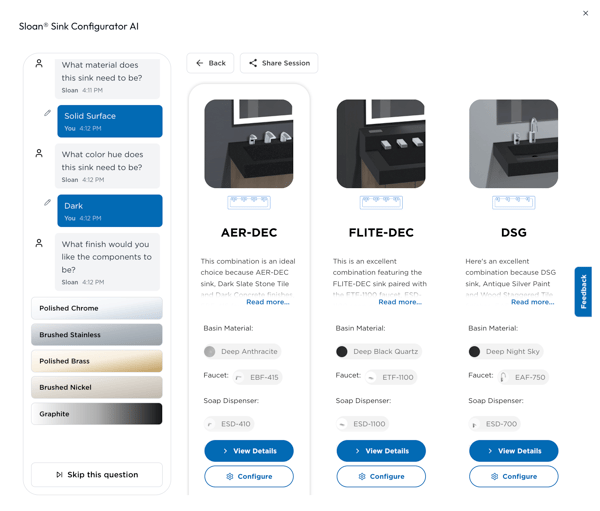
Needs Analysis asks about the room and the traffic, not the model. It then assembles the bowl, the flushometer, the carrier and the seat as one line a specifier can read. The four part numbers still print, because the wholesaler needs them.
Configure holds the clearance and flow rules you publish, and applies them as the buyer picks. Choose an accessible stall and the flush control side is set for you. Choose a lavatory over a 34-inch rim and Configure refuses it. A California job stops showing fixtures that only meet the federal lead number.
Quote prints the gpf, the gpm and the lead standard on the document, so the reviewer does not look them up. The cover page is yours to control. Handoff sends the same line items out as structured data for the schedule.
A 3-0 by 6-8 fiberglass entry door with two 12-inch sidelites, for a coastal Florida job. The unit needs impact glazing, a Miami-Dade NOA number on the submittal and a right hand inswing jamb. Threekit asks for the jobsite and the opening first, then shows only the door units that carry that NOA.